Navigating FTC + HIPAA Compliance for Healthcare Influencer Marketing: The Invisalign Example
Healthcare decisions are super personal. Before people consider a treatment, they want to understand the experience, hear from someone they trust, and picture how it could fit into their lives. Great healthcare influencer marketing makes that connection.
For brands and providers, the creative challenge is making those stories compelling while navigating FTC, FDA, and HIPAA requirements. Creator selection, firsthand experience, and thoughtful briefing all shape how well a campaign earns attention and builds trust.
This guide shows you how to put those pieces together to explore creator selection, authentic storytelling, and compliance in practice, drawing on Sulfur Studio’s experience executing multiple creator campaigns for Invisalign, a Class II medical device regulated by the U.S. FDA.
What is Healthcare Influencer Marketing?
Healthcare influencer marketing is the practice of working with influencers to promote your healthcare offering. These influencers use their credibility and expertise or personal experiences to build trust and influence the health-related decisions of consumers.
Unlike with traditional influencer marketing, healthcare influencer marketing doesn’t just limit partnerships to social media personalities. It also relies on licensed professionals, subject matter experts, and real patients. In other words, folks who can authentically and authoritatively vouch for products or procedures.
What Makes Healthcare Influencer Marketing Challenging?
Influencer marketing in an industry like healthcare is extremely challenging because people’s health and safety are on the line. That’s why laws and regulations exist, serving as guardrails to keep advertisers from making false or exaggerated claims that could deceive consumers.
Here’s a closer look at the key reasons why you need to tread carefully with healthcare influencer marketing.
Navigating Complex FTC and FDA Regulations
The healthcare industry is heavily regulated by the FTC and FDA regarding medical claims and paid partnerships. For starters, influencers can’t make exaggerated or unwarranted claims about what a product or procedure can do. The FDA also prohibits leaving out safety information and potential side effects in the promotional messaging, especially since Invisalign is a Class II medically regulated device.
This often forces healthcare brands to police messaging and language, sometimes even limiting influencers to pre-approved scripts.
On top of this, there are strict disclosure requirements for any material connection. If an influencer fails to state when a post is sponsored or gifted, it could lead to expensive penalties. Even vague or hidden disclosures count as a violation.
Complying with HIPAA Privacy Rules
HIPAA rules prevent covered entities (hospitals, doctors, and clinics) and their business associates (platforms or agencies) from using identifiable patient health information in their marketing material without explicit permission from the patient.
So it’s tricky to use real patient lists, before-and-after photos, medical histories, or other identifiable information in your campaigns or share them with the agencies and influencers you work with.
On the other hand, creators are free to share their own experience using a medical device or undergoing a procedure.
The following Invisalign content featuring professional soccer player Kelley O’Hara perfectly navigates these complexities. The content is published from the brand account, leaving no doubt that the video is coming from Invisalign. Kelley then shares her personal experience using Invisalign, explaining how it gives her confidence without making exaggerated medical claims. Note: Sulfur managed and coordinated orthodontic treatment for participating athletes, including Kelley O’Hara, so their content drew on firsthand experience with Invisalign. That experience gave their stories an authentic foundation.
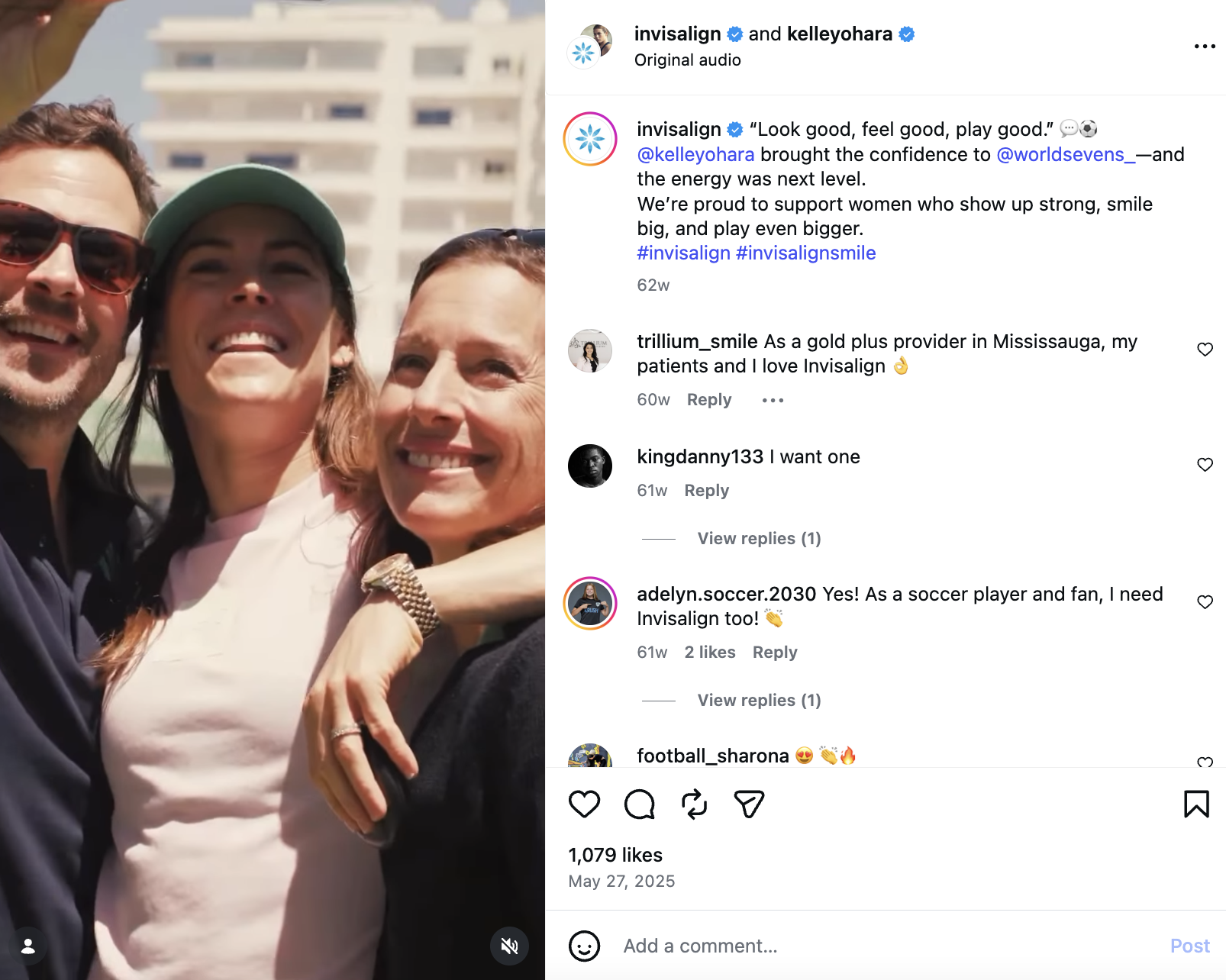
Kelley O’Hara x Invisalign
Source: Invisalign
The Need for Trust and Authenticity
Marketing healthcare products or procedures is much riskier compared to other industries because bad health advice can hurt people physically and mentally. It’s also how you run afoul of FTC, FDA, and CDRH (which is the branch of the FDA responsible for regulating medical devices) agencies.
One false claim, one unverified tip could have serious consequences on people’s lives. Allergies, side effects, varying results, and variable timelines must all be accounted for.
For example:
An influencer drafts content making a claim about what a medical device can do.
The brand reviews and approves the claim.
Someone relies on the claim and buys or uses the device.
They experience a serious side effect that wasn’t mentioned in the claim, causing permanent damage.
Misleading health claims can expose brands and creators to regulatory action or civil claims. The applicable obligations and potential liability depend on the parties, conduct, and facts.
A manufacturer could be liable under products liability claims, if there are side effects or injury caused by side effects, ingredients or defects or due to failure of disclosure.
Meanwhile, as an endorser, a creator/influencer could also be held personally liable for failing to verify the safety of the product or making unverified health claims. (e.g. Intentional or negligent misrepresentation and/or false advertisement claims).
So it makes sense that many consumers in this sector are wary of health-related advice coming from non-credible sources. Fabricated or overly commercial endorsements instantly come across as suspicious.
That’s why brands working with influencers need to bank on truth, transparency, and authenticity to build trust with their target audience. A non-expert lifestyle influencer can’t confidently claim that a product addresses a certain pain point if they haven’t experienced the results themselves.
Brand Reputation Risks
In a sector as sensitive as healthcare, even one small mistake by an influencer could blow up into a huge controversy. No matter how unintentional, improper disclosures and inaccurate language could be the spark that ignites a PR crisis, which could be damaging to your brand reputation.
Best Types of Influencers for Healthcare Marketing
From fitness experts and medical professionals to athletes and social media personalities, there are different influencer types that can work for healthcare brands. The right fit depends on factors like the product type, target audience, marketing angle, and campaign goal.
You can even mix things up with multiple types of influencers to reach different audience segments. The most common types of healthcare influencers are:
Trusted Public Figures and Wellness Creators
Social media creators who have made a name for themselves in the health and wellness space are some of the best people to promote your healthcare brand. They have the reach, the audience, and the credibility to get your message across to the right people who look to them for advice and recommendations.
Trusted public figures in corresponding spaces like fitness or sports are also a great fit for healthcare brands. These influencers have the ability to reach a massive audience that has some interest in health-related topics.
That’s why athletes are at the forefront of many Invisalign campaigns.
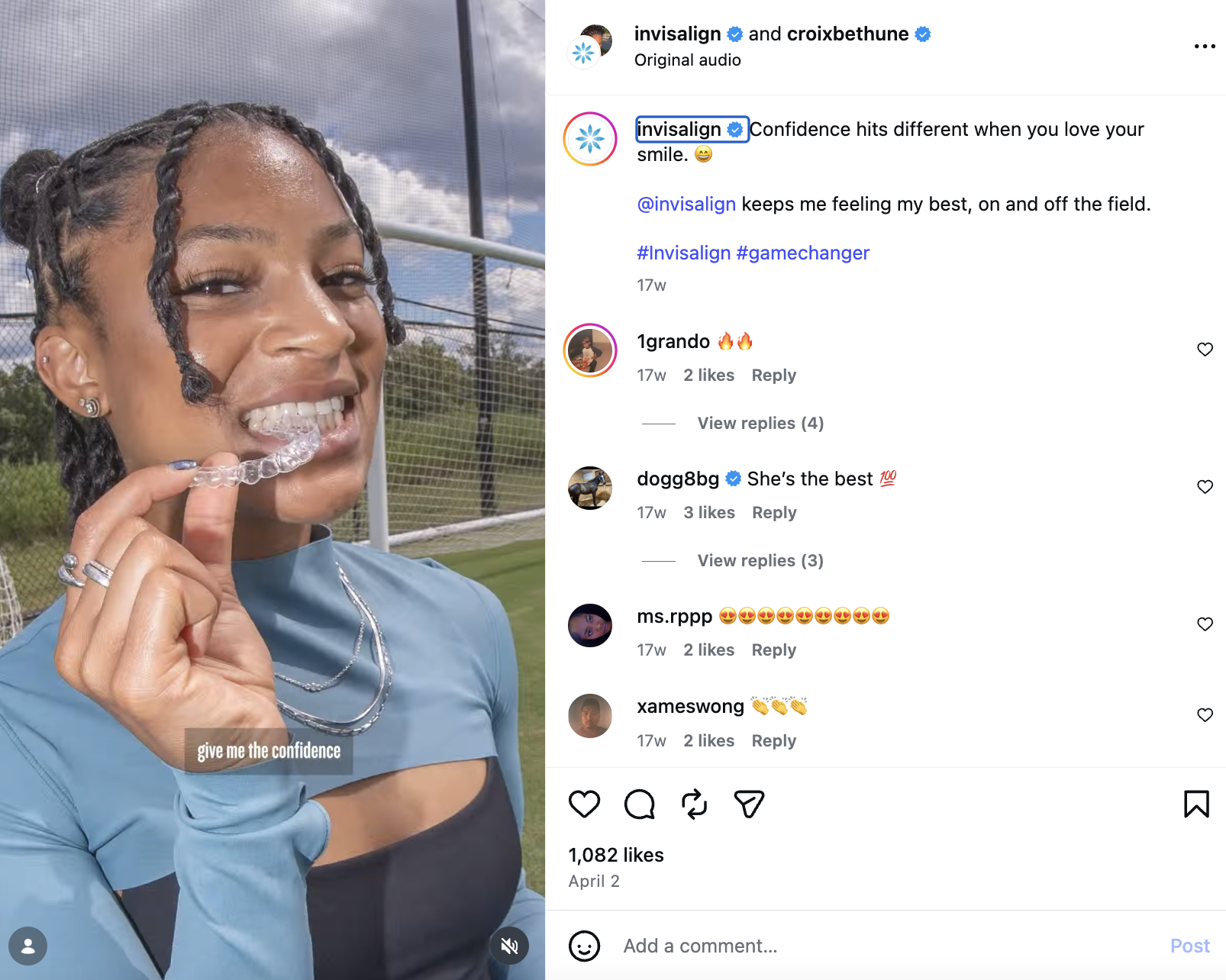
Croix Bethune x Invisalign
Source: Instagram
Real Patients and Relatable Micro-Influencers
While big-name influencers bring publicity, nothing beats the trust that real people and real stories can generate. You may find out about a medical product from your favorite athlete. But it might take a transformation video featuring an actual patient to convince you that it really works.
That’s why real patients can be some of the most impactful advocates for healthcare brands. Their healthcare journey serves as proof of what your product can do. And unlike major influencers and public figures, they’re relatable to everyday consumers.
Smaller creators like micro-influencers are also a great alternative for balancing relatability with reach. They’re not so renowned that they’re completely unrelatable to regular people. And even though they don’t have the following size of larger influencers or celebrities, they still have hundreds of thousands of followers who look to them for advice and content.
Invisalign turns smaller influencers into advocates who can honestly vouch for its products from their personal experiences.
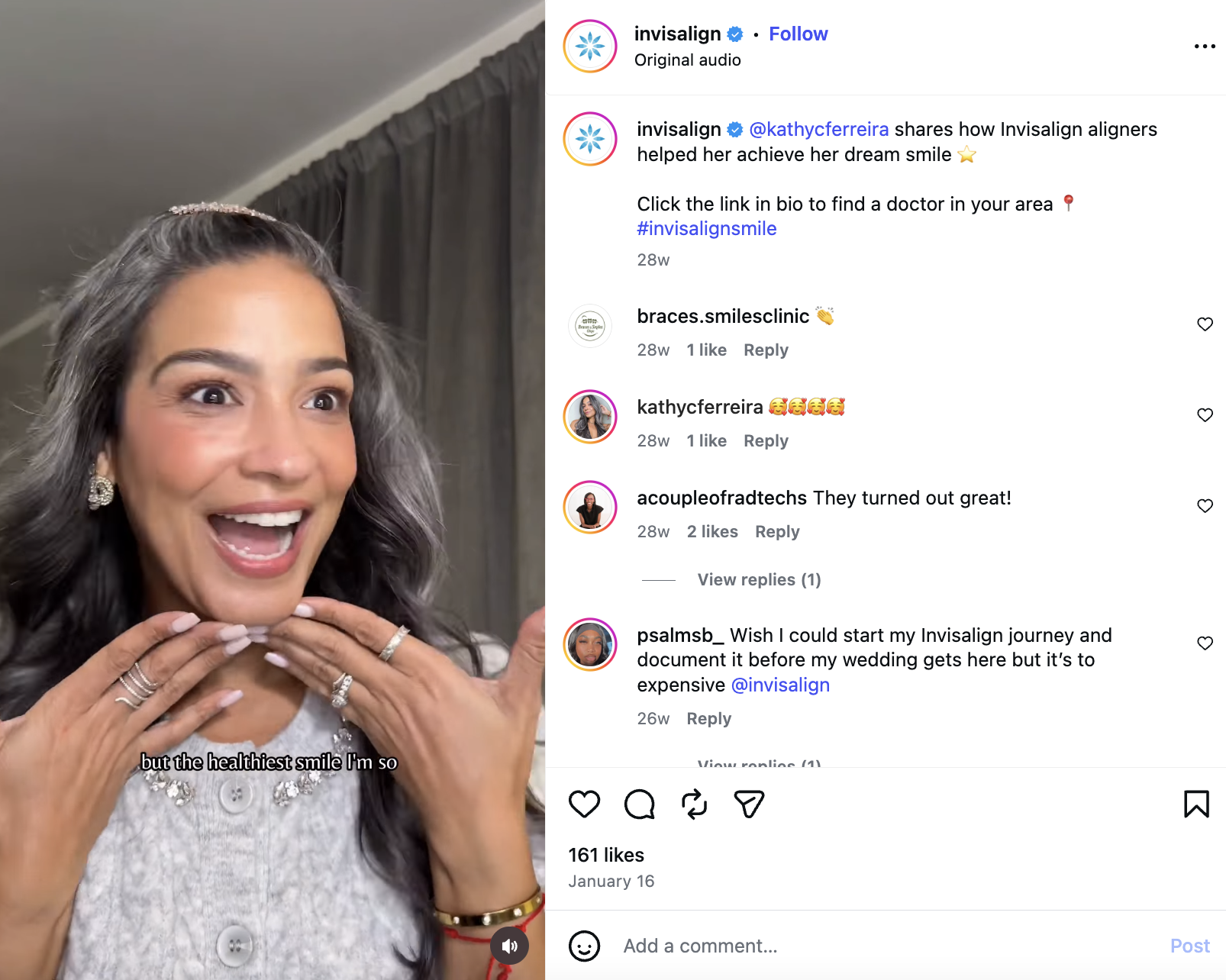
Kathy Ferreira x Invisalign
Source: Instagram
Subject Matter Experts and Licensed Professionals
Doctors, medical professionals, and subject matter experts will bring in much-needed product education to help consumers make informed health-related decisions. Whether it’s a detailed walkthrough of a procedure or an explainer breaking down the ingredients of a product, expert-led influencer campaigns are great for improving trust and adding credibility.
This makes them indispensable for complex healthcare offerings or new innovations that require a deeper level of understanding.
For example, orthodontists and dental professionals are sometimes involved in Invisalign influencer marketing campaigns.
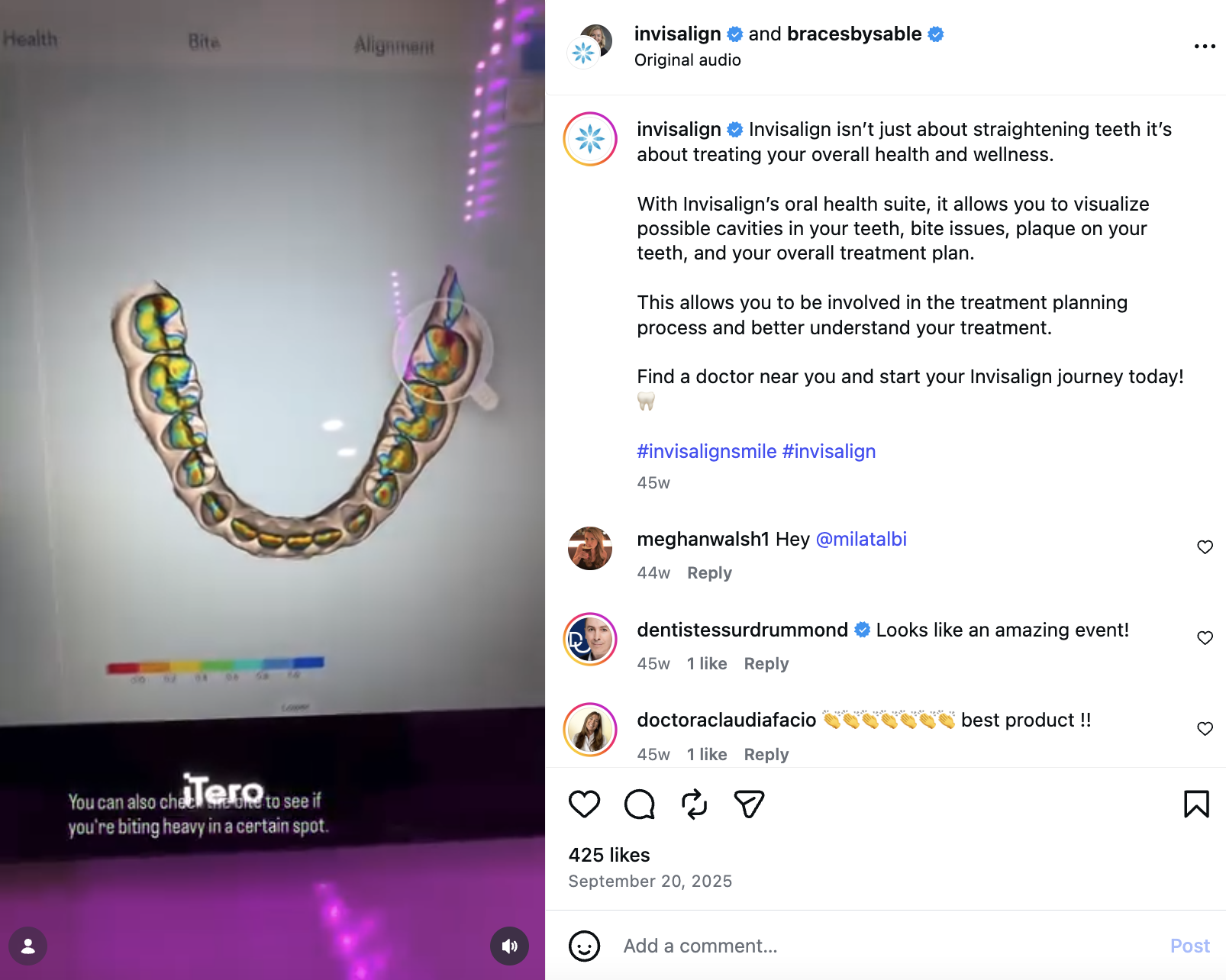
Orthodontist Creator Content x Invisalign
Source: Instagram
| Healthcare Influencer Type | Pros | Best For |
|---|---|---|
| Public Figures and Wellness Creators |
|
Brand awareness campaigns |
| Real Patients and Micro-Influencers |
|
Conversion campaigns |
| Subject Matter Experts and Licensed Professionals |
|
Product education campaigns |
How to Work with Influencers for Healthcare Marketing
As we’ve already established, it’s no easy feat to work with influencers for healthcare marketing. Between rising privacy concerns and growing influencer fatigue, the restrictions and the distinct industry implications make it all the more challenging to effectively engage your target audience.
Sulfur is uniquely positioned to help medical and healthcare brands navigate these complexities. We pulled off a winning healthcare influencer marketing campaign with Invisalign that targeted three distinct audience segments using authentic influencer-generated content.
Using that experience, let’s share some of the best practices that will help you build winning influencer campaigns for your healthcare brand.
Matching Influencer Selection to Target Audience
Whether you’re working with licensed professionals, public figures, or smaller creators, what matters most is that you match influencers to your target audience. Which influencers can actually reach the people you want to reach?
For the Invisalign campaign, there were three distinct audiences we wanted to reach: teens, moms, and orthodontists.
So we activated young influencers who could simultaneously reach teens and their moms, pairing them with qualified orthodontists whose industry standing allowed us to also gain credibility in the orthodontic community.
This included a partnership with YouTubers like Funk Bros, who had a massive fan base of teenagers. The campaign also involved partnerships with other influential channels like What’s Inside?, JeanineTV Vlogs, and Kristopher London, who each had a strong influence over teen audiences.
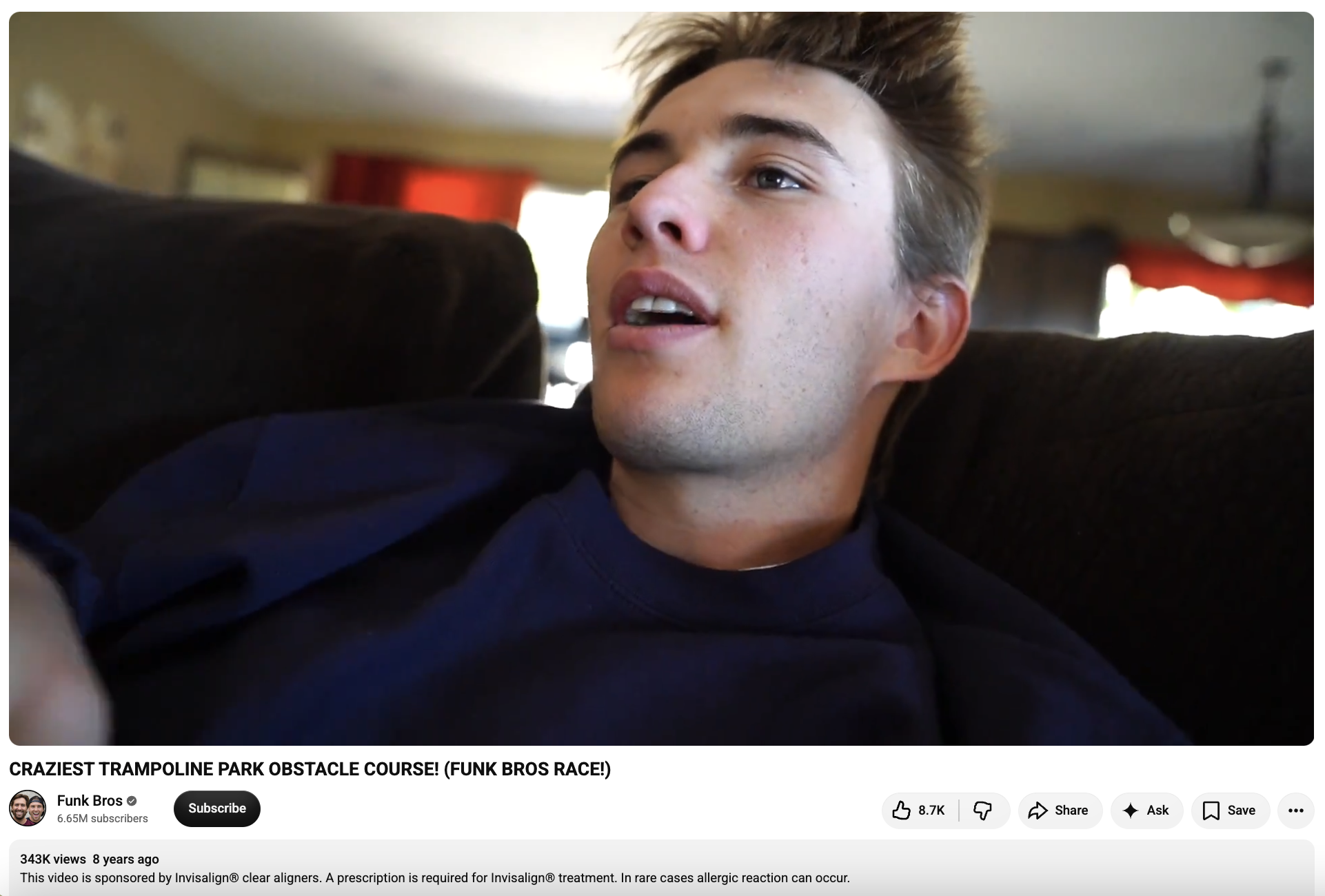
Funk Bros x Invisalign
Source: YouTube
Briefing Influencers on Claims and Disclosure Guidelines
Here’s the most challenging part about healthcare influencer marketing: ensuring that your partnerships are in compliance with applicable FTC guidelines. There’s a multi-tiered challenge for healthcare brands because you need to worry about FTC guidelines regarding influencer partnerships and guidelines specific to the healthcare industry.
So in addition to making sure influencers are properly disclosing your partnership, you’ll also want to be vigilant about the language they use and the claims they make.
This basically means briefing influencers thoroughly about disclosure requirements, preferred terms, words or claims to avoid, and other details that could influence people’s healthcare decisions. While this is necessary to avoid legal repercussions, it’s also how you guide consumers to make informed decisions that benefit them.
The FTC requires that influencer partnerships follow these disclosure guidelines:
Disclose any type of material connection, whether it’s monetary compensation, free products/service, personal relationships, or employment ties.
Disclosures should be prominently visible within the endorsement itself. For videos, this means including it within the video content in addition to the description.
Use language that’s clear and simple. Example: sponsored, advertisement, and ad.
Additionally, influencers cannot talk about their experience with a product they haven’t tried. And they’re prohibited from making claims that the brand or manufacturer can’t back up with proof.
Every Invisalign partner in this campaign was briefed on these details, which was crucial for many reasons.
We were targeting a teen audience, which added yet another layer of advertising complexity.
We were marketing a FDA-regulated Class II medical device.
In the sponsored video created by the What’s Inside? channel, the sponsorship was mentioned multiple times and in multiple places: at the beginning of the video, in the caption, and in a text overlay. Additionally:
Dan mentioned details like how treatment can vary from person to person.
He advised the audience to talk to their doctor if they’re thinking about getting it done.
The caption also mentioned how allergic reactions can occur in rare cases.
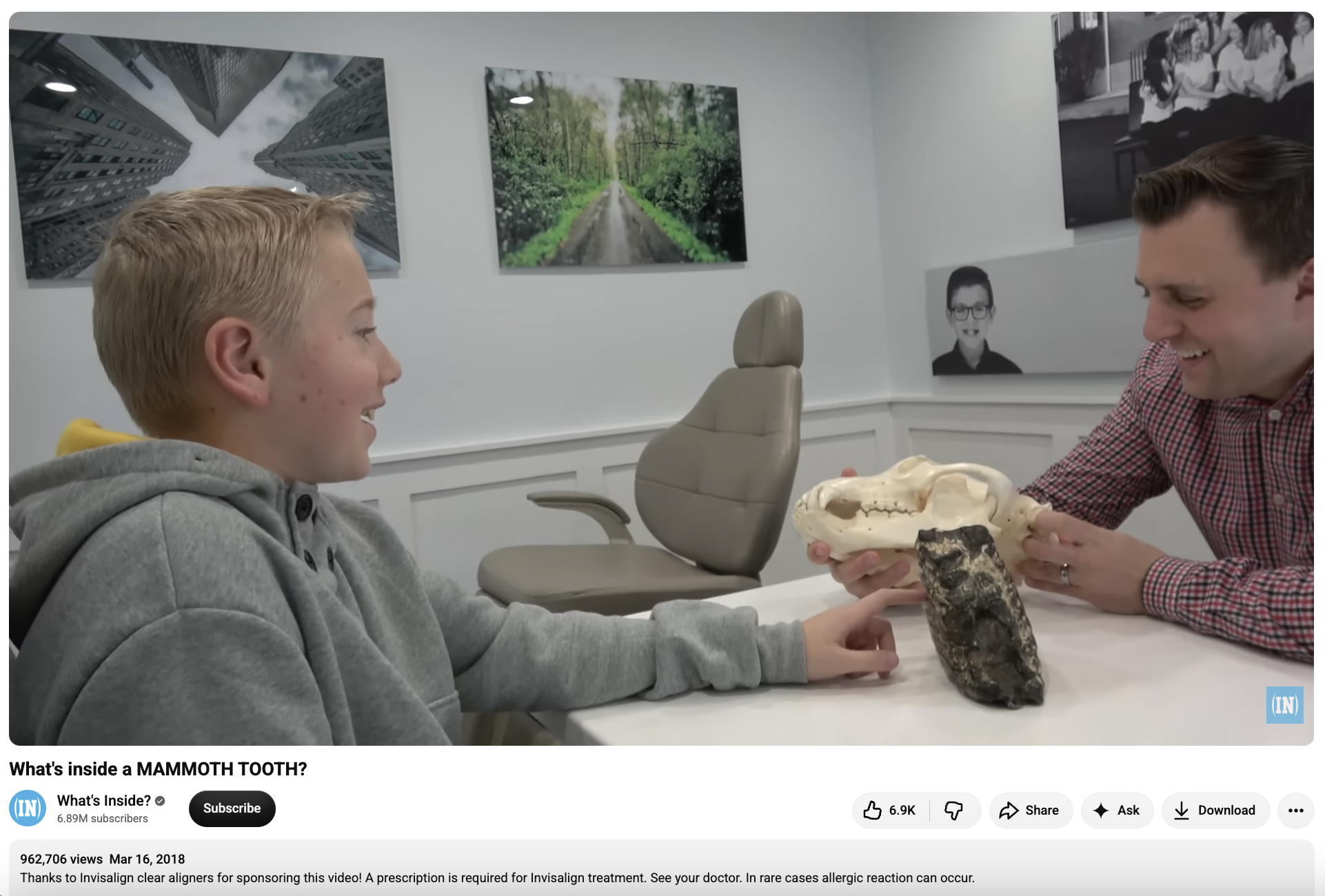
What’s Inside? x Invisalign
Source: YouTube
Using Informative Storytelling to Engage Audiences
In between all the medical talk, the disclosures, and the legal language, it’s easy for healthcare influencer campaigns to sound forced or scripted. And it’s going to quickly bore your audience. That’s where you need to strike the right balance between creative freedom and regulatory compliance.
While your brief provides detailed instructions on FTC compliance, you should still leave the actual storytelling to the influencers. Give them the creative freedom to incorporate your product and messaging in a way that fits their usual voice and content style.
Multi-part videos are a great way to pull off this kind of informative storytelling, as it allows the audience to follow along on the influencer’s journey. The video format itself supports this kind of storytelling because the influencer could still fit in all the essential disclaimers and information in their own voice.
That’s exactly how some of the Invisalign partners structured their sponsored content in the campaign. In her JeanineTV Vlogs channel, Jeanine Amapola created a two-part video where she documented her Invisalign journey. The first part showed Jeanine going to the orthodontist as she vlogged about her experience getting Invisalign for the first time.
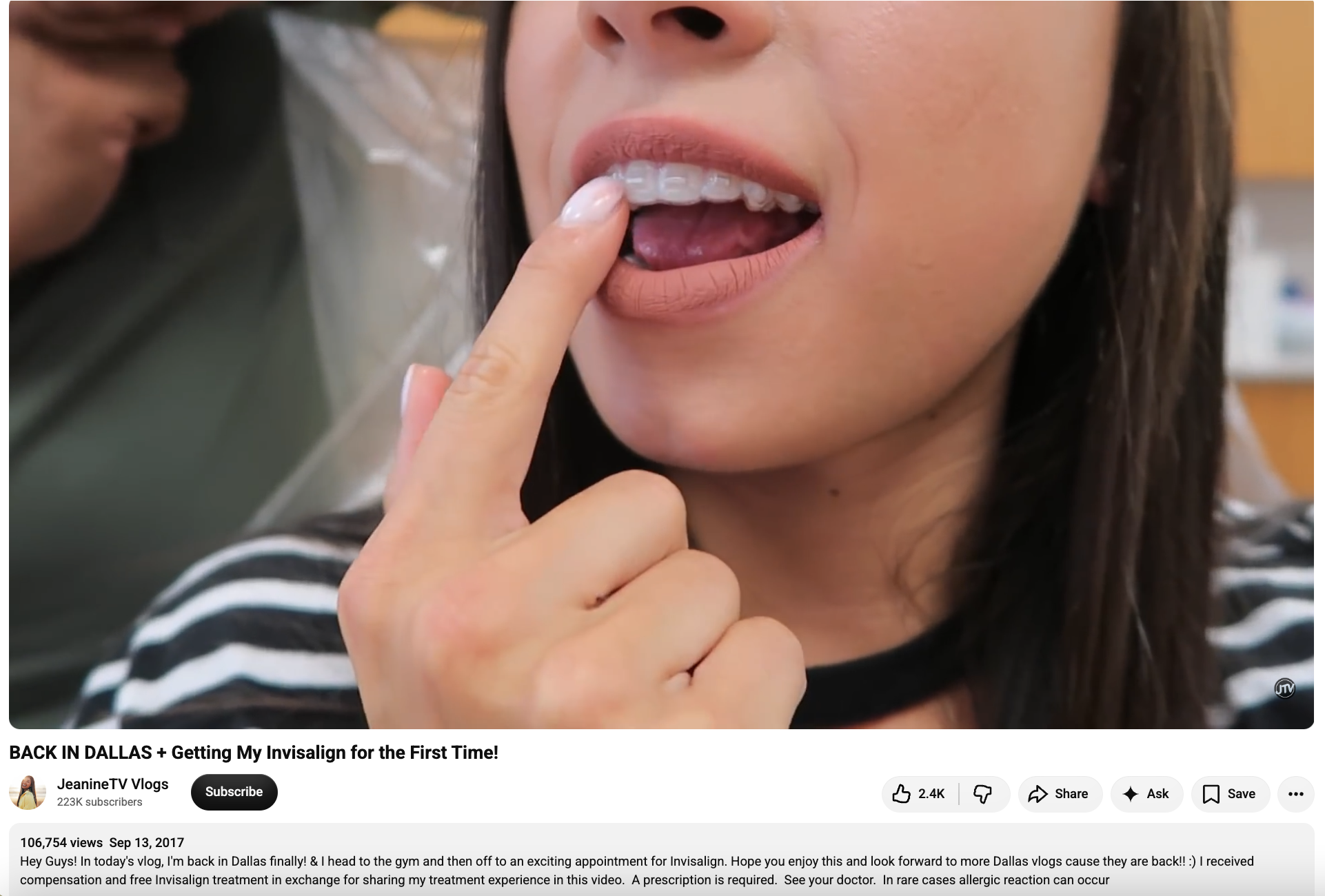
JeanineTV Vlogs x Invisalign, Part 1
Source: YouTube
She then created a follow-up video sharing an update about the treatment, which provided her viewers with a close-up look at how the treatment improved her teeth.
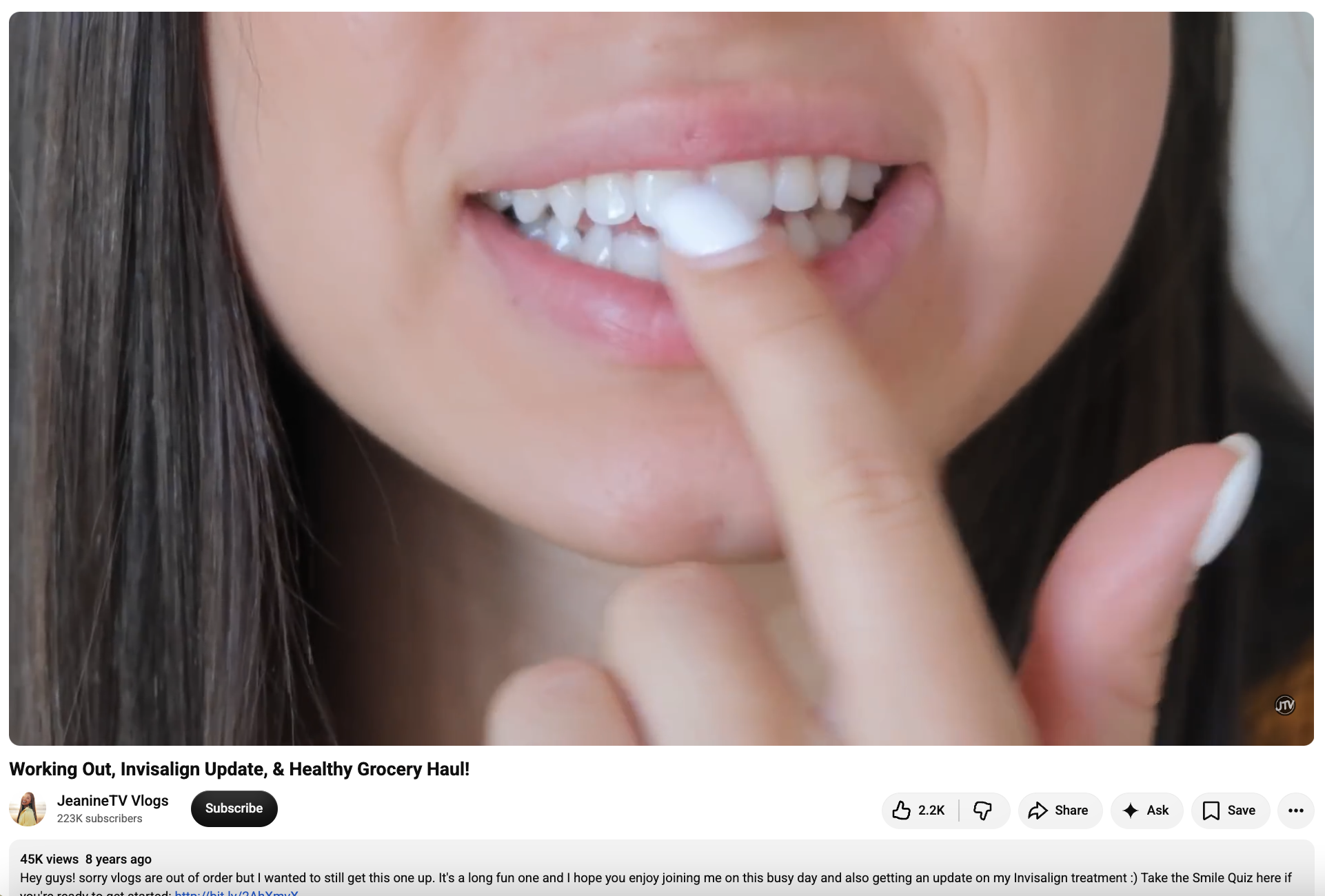
JeanineTV Vlogs x Invisalign, Follow-Up
Source: YouTube
Sharing Real Stories and Experiences as Proof
When you’re marketing a healthcare product, real experiences make the story worth listening to. Following your favorite creator’s treatment journey brings the appointments, daily routines, and personal milestones to life, helping audiences picture what the experience could look like for them.
The details make the difference: the questions they asked, the adjustments they made, and the moments that mattered. That’s what gives creator content its credibility and makes it resonate, especially in healthcare, where decisions are deeply personal.
That’s why for the Invisalign campaign, we made sure influencers were in a position to share their authentic personal experiences with the treatment. YouTubers like Kristopher London documented their journey going to the orthodontist and explained to their viewers the process of getting it done.
Each influencer also made sure to mention how although the video was sponsored, they’re sharing their honest opinion. Kristopher created multiple videos to share his experience before, during, and after the treatment to give viewers a realistic understanding of what they’re signing up for.
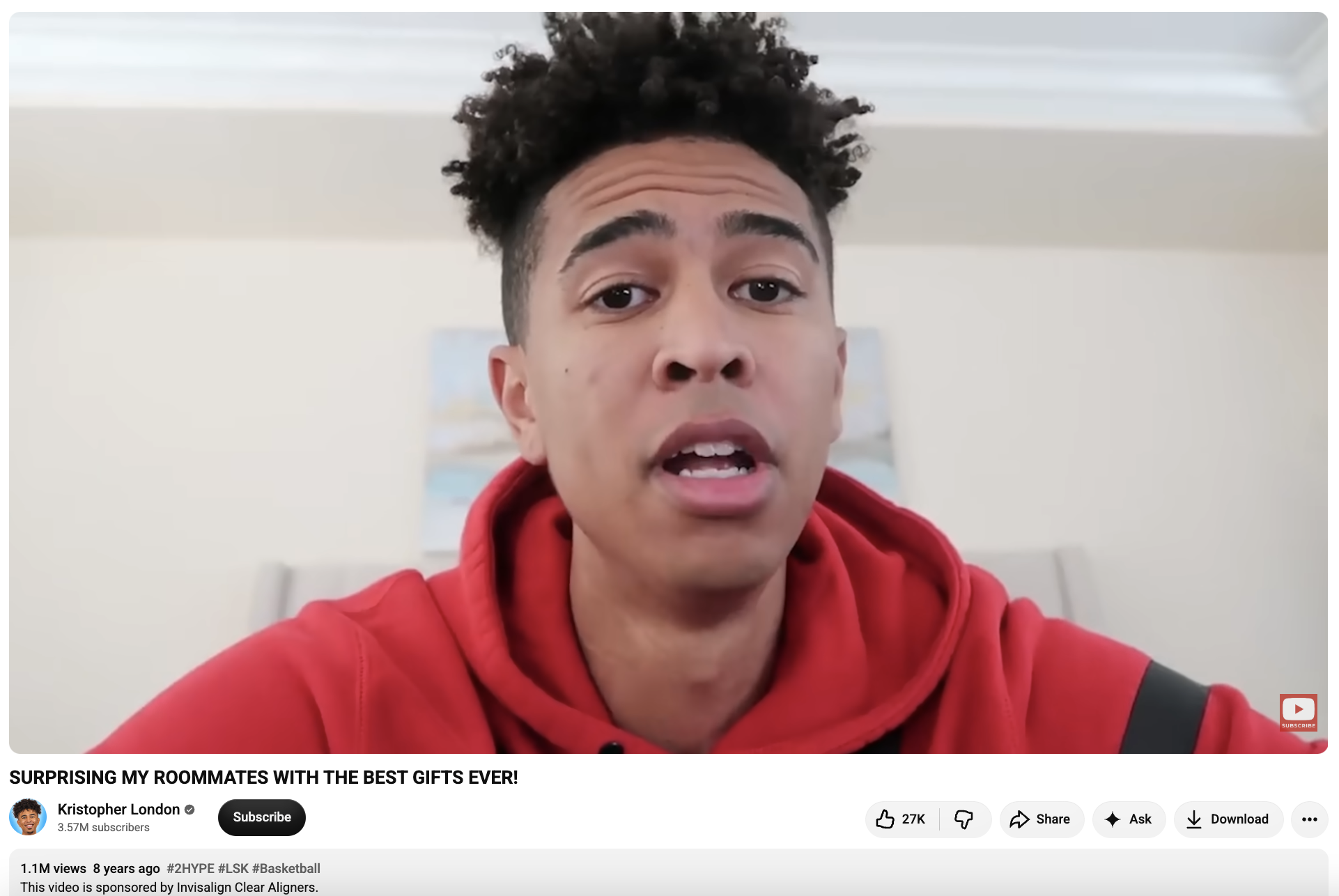
Kristopher London x Invisalign
Source: YouTube
Gearing up for Healthcare Influencer Marketing Success
Between strict advertising regulations and complex healthcare laws, working with influencers to market a healthcare product isn’t easy. Even if your team is fluent in FTC regulations and HIPAA rules, you still need to worry about the influencer management aspect of your campaign.
With an in-depth knowledge of healthcare marketing and influencer partnerships, Sulfur was able to flawlessly pull off a campaign that drove leads while maintaining regulatory compliance for Invisalign. The campaign saw 2x more impressions than other campaigns and led to a 138% increase in leads.
Want to work with influencer marketing experts who can navigate complex healthcare advertising rules? Schedule a call with Sulfur today.
Frequently Asked Questions
What is the role of influencer marketing in healthcare?
Influencer marketing can help healthcare brands take a “human approach” to promoting their product. It can be used to build awareness, improve product understanding, and guide consumers to make informed decisions.
What is a health influencer?
A health influencer or healthcare influencer is someone who has established credibility in the healthcare space and is able to influence people’s health-related decisions.
What are the different types of healthcare influencers?
The different types of healthcare influencers are wellness creators, real patients, licensed professionals, and subject matter experts.