Music artists are influencers in their own right, commanding a huge following because of their talent and charisma. So you might think their social media presence alone is enough to promote new songs and albums. And artists like Sabrina Carpenter, of all people, wouldn’t need other influencers to make her songs go viral.
But songs flop, and albums fail when they don’t get much initial traction. That’s why you can’t leave it up to chance for your next single or album to automatically take off. YouTube creators and influencers can give you that much-needed traction to build enough buzz for your song, turning it into the next viral tune that you hear everywhere.
That’s exactly what Sulfur Studio did for Sabrina Carpenter’s “Tears” when it initially dropped. In this post, we provide you with a practical guide on influencer marketing for musicians, taking inspiration from the “Tears” campaign. Let’s dive in.
What is Influencer Marketing for Musicians?
Influencer marketing for musicians involves partnering with social media content creators to feature an artist's song in their content. This can boost streaming numbers and reach new fanbases by turning audio tracks into the organic background of viral content.
For example, the song could be used as:
Background music for short-form videos and lifestyle posts
The main subject of reaction clips
The track for a viral dance challenge
Unlike regular influencer marketing, promoting music is less about blatantly telling people to “listen to this song.” Influencer marketing for musicians needs to feel organic and subtle, driving music discovery through repeat exposure.
Interestingly, that’s also where the advantage lies because when enough creators use the track in their content, it ultimately catches on. Ever had that one song you can’t seem to get out of your mind because you’ve heard it in every trending Reel or TikTok? That’s the kind of impact that influencer marketing for musicians can have.
In fact, a Deloitte study found that user-generated content is the most effective source of music discovery for younger consumers. 82% of Gen Zs and 70% of Millennials find new music and artists through videos on social media or UGC sites, putting them far ahead of traditional music PR.
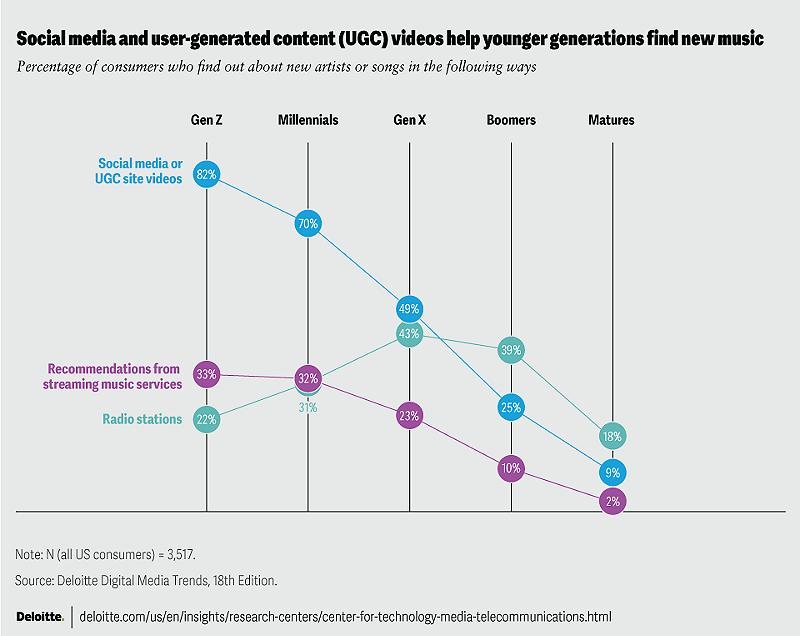
Source: Deloitte
Why YouTube Matters for Music Influencer Marketing
With the popularity of Instagram Reels and TikTok, it may seem like short-form video is the only content format that matters right now. But a trending TikTok sound doesn’t automatically guarantee engaged listeners for the full single, let alone your entire album.
Granted, most people who use the sound in their content do so because they like it. That doesn’t mean they like it enough to look up the song and listen to the whole thing on another streaming platform. So when it comes to music influencer marketing, YouTube makes the most sense for several reasons.
Supports Native Listening and Streaming
Platforms like YouTube generate more durable listeners because that’s where the full song and music video live. It’s easy for someone to discover the track in a trending Short and instantly find multiple ways to listen to the whole song.
For example, when you tap on the “Tears” track from a Short on the main YouTube app, you’re taken to the dedicated audio page. Here, you can tap on the thumbnail to watch the entire music video, preview it, or save it. You can even tap on the YouTube Music icon at the top of the page and instantly stream the song on YouTube Music.
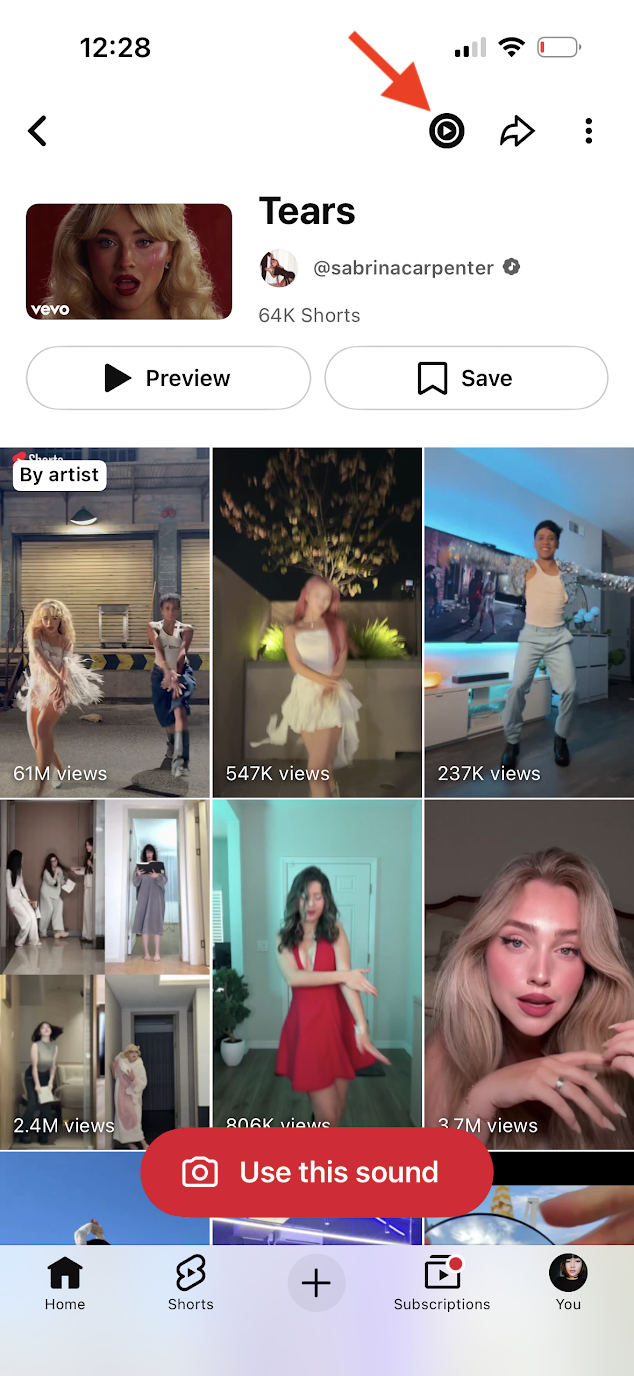
Source: YouTube app
Offers Large-Scale Reach
It also helps that YouTube continues to be the most popular social media platform among U.S. adults. A Pew Research Center study found that 84% of U.S. adults use the platform, putting it far ahead of other social networks like Facebook, Instagram, and TikTok. So it gives you the chance to get your music in front of a bigger audience.
With YouTube creators backing up your promo, you can effectively turn your new track into a viral sensation.
Allows Creative Collab Ideas
As a native video platform, YouTube allows creators to organically incorporate music videos and audio tracks into their content. And there are virtually endless ideas to do that. For example, you could do:
Custom Remixes and Mashups: Ask creator-musicians or audio-focused YouTubers to remix, rebuild, or sample your stems in their videos. This can build intrigue and drive audiences to the original video or track.
Vlog Soundtracks: Give lifestyle, travel, or tech vloggers free licensing to use your unreleased or instrumental tracks as background music in exchange for a description credit. This is a great way to build awareness and attract new audiences through repeat exposure.
Reaction and Breakdown Videos: Send your music video or track to channel hosts who specialize in genre-specific music reviews or first-time reactions. This can build sustained engagement through long-form content and drive a new fanbase to your video.
In-Video Challenges: Partner with comedy, lifestyle, or challenge creators to feature your chorus or hook as the background gag or central theme of their video. This is the strategy we went with for the Sabrina Carpenter “Tears” promo.
How to Work with YouTube Creators for Musicians: The Sabrina Carpenter Example
Once you’ve decided to work with YouTube creators, it takes more than just asking them to create content with your music. Things could easily go out of hand unless you take a structured approach when collaborating with them. For all you know, creators could put your music with a controversial video that’s harmful to your brand reputation.
Organizing your efforts helps you stay on-brand and control the outcome of your campaign.
As the leading experts behind the viral “Dance Break” challenge that launched “Tears” into a global sensation, Sulfur Studio knows what it takes to achieve music influencer marketing success. Here’s a breakdown of what we did for Sabrina Carpenter, so you can see exactly what goes into building a music promo campaign involving YouTube creators.
Diversifying Influencer Selection to Maximize Reach
Music influencer marketing campaigns are all about getting your music in front of as many people as possible. That’s why influencer diversification is so important because it allows you to reach unique audiences. When you work with influencers across diverse backgrounds, it’s less likely that they’ll have an audience overlap.
Working with 20 influencers who have a combined reach of 10 million seems much less impressive when those 20 influencers share about 80% of the audience.
On the other hand, even just 5 influencers who can collectively reach a unique audience of 5 million will be much better for achieving virality. So for the “Tears” promo campaign, we worked with a diverse selection of 29 creators spanning dance, entertainment, and lifestyle.
While creators like Cristian Dennis challenged themselves to try the choreography wearing heels…
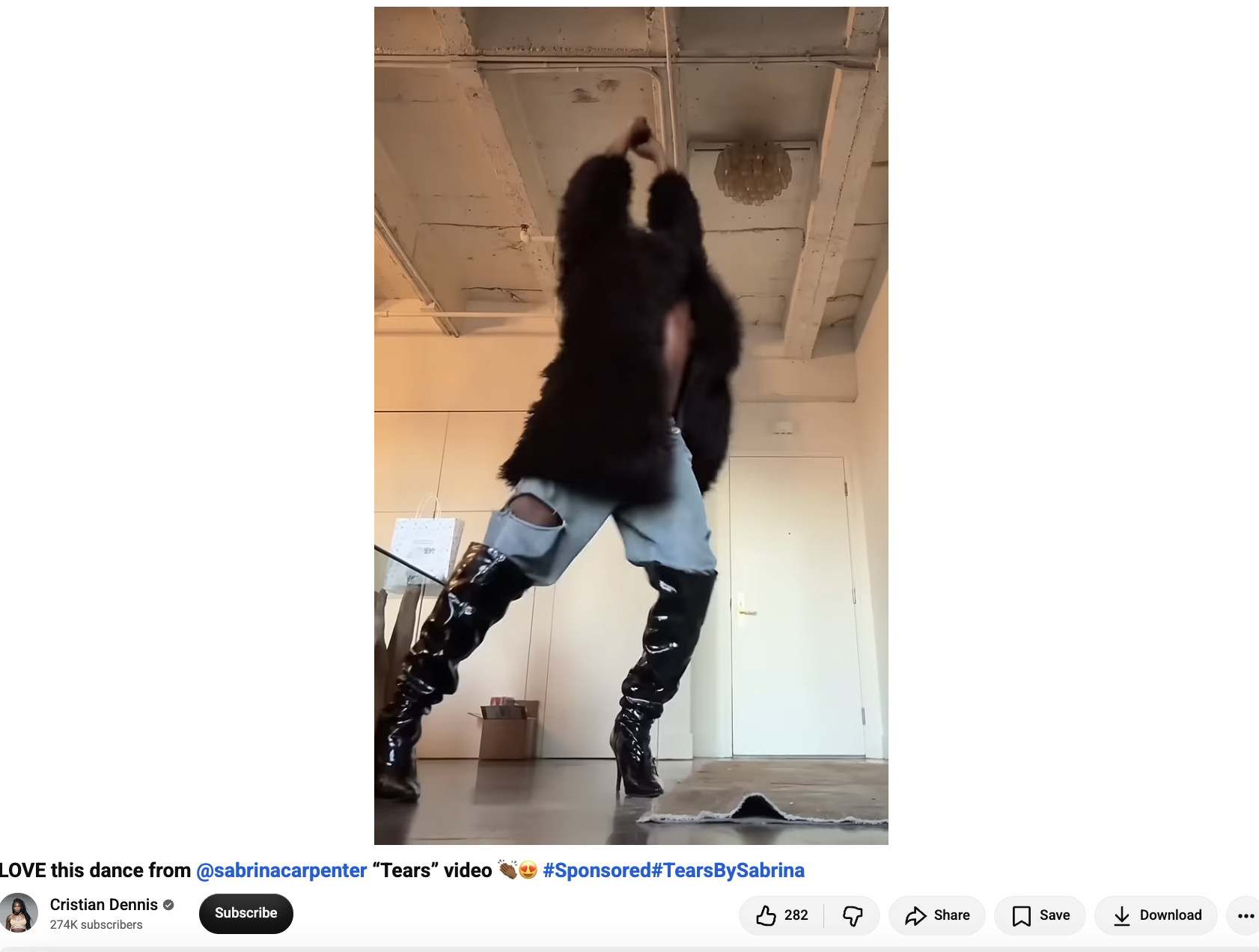
Source: YouTube
Elsa Arca entertained a loyal fanbase that tunes into her viral, high-energy content.
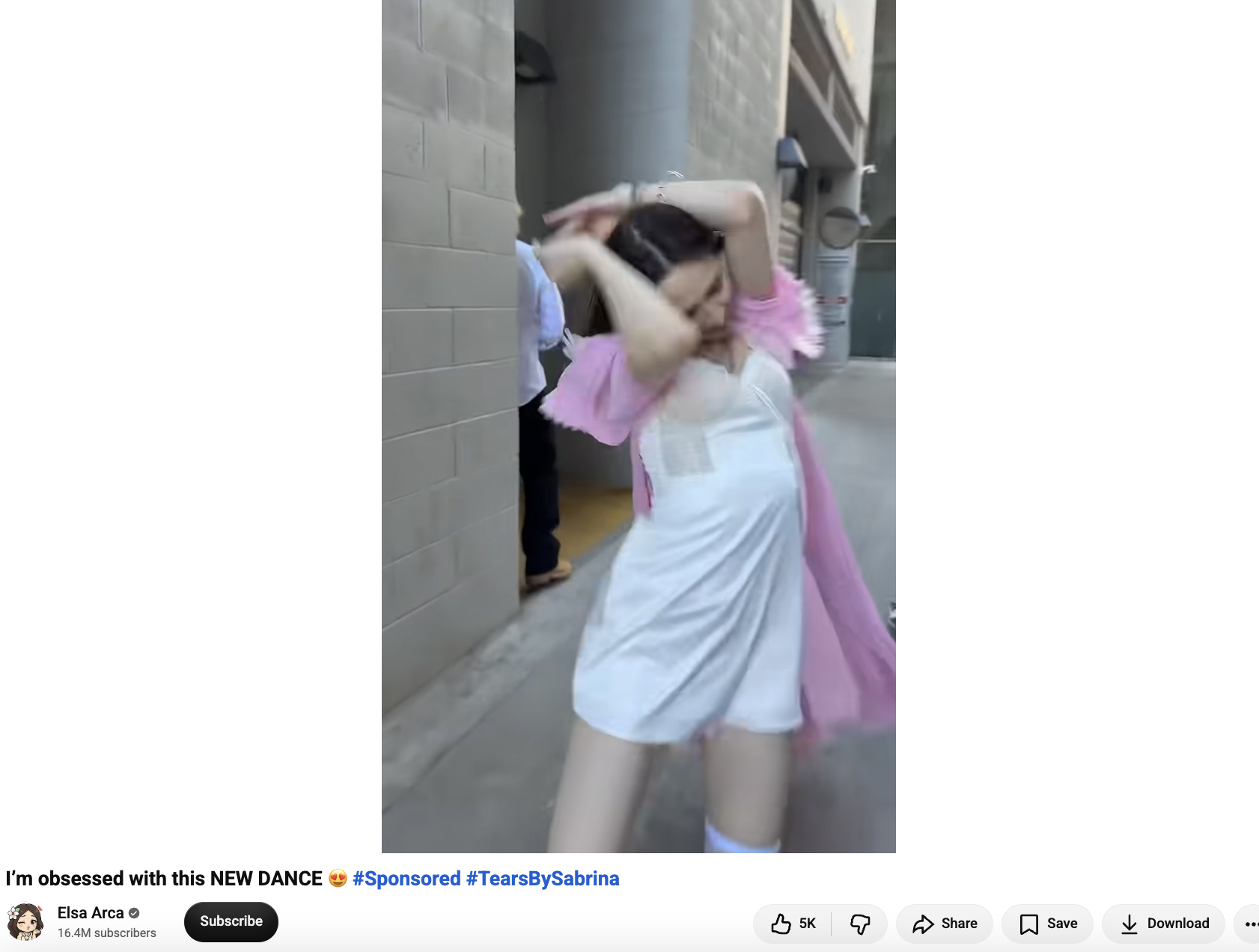
Source: YouTube
And Helen Peng awed her audience with moves that were impressive even by the standards of K-pop fans.
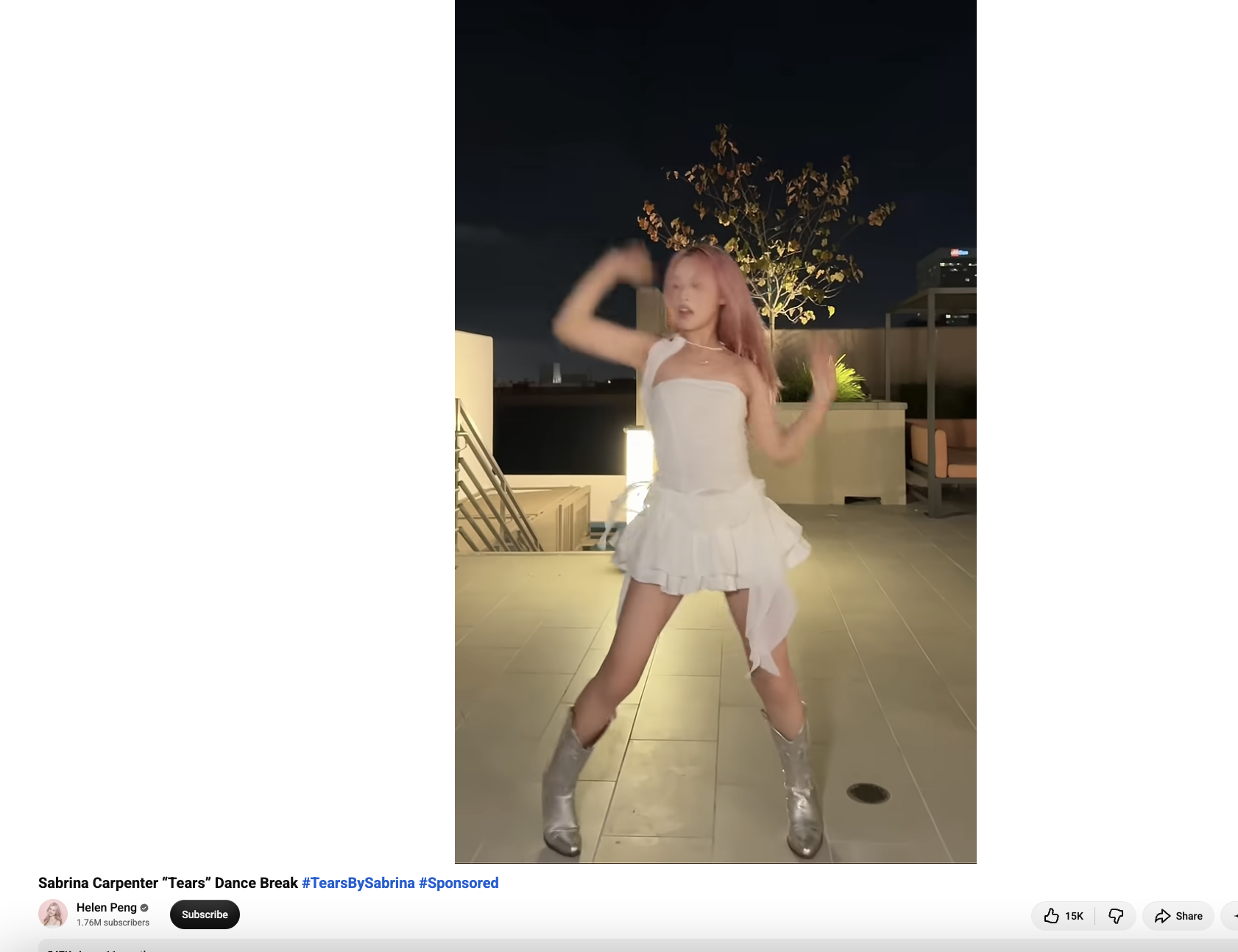
Source: YouTube
That’s how we got 2.69 million unique viewers to watch the “Tears” takeover. And the artist’s original Short now has 61 million views, with the full video attaining over 84 million views.
Creator-Led Choreo for a Music Takeover
Beyond extending your reach across a unique audience base, working with a diverse influencer roster comes with other benefits. Each of these influencers can bring something different to the campaign, whether it’s a distinct content style, angle, or aesthetic.
For the “Tears” takeover, all 29 creators brought range by adding their own style and creativity to the choreography.
Creators like Melissa Becraft did a theatrical solo take in a shimmery Rocky Horror-style outfit that you could only expect from a Broadway dancer.
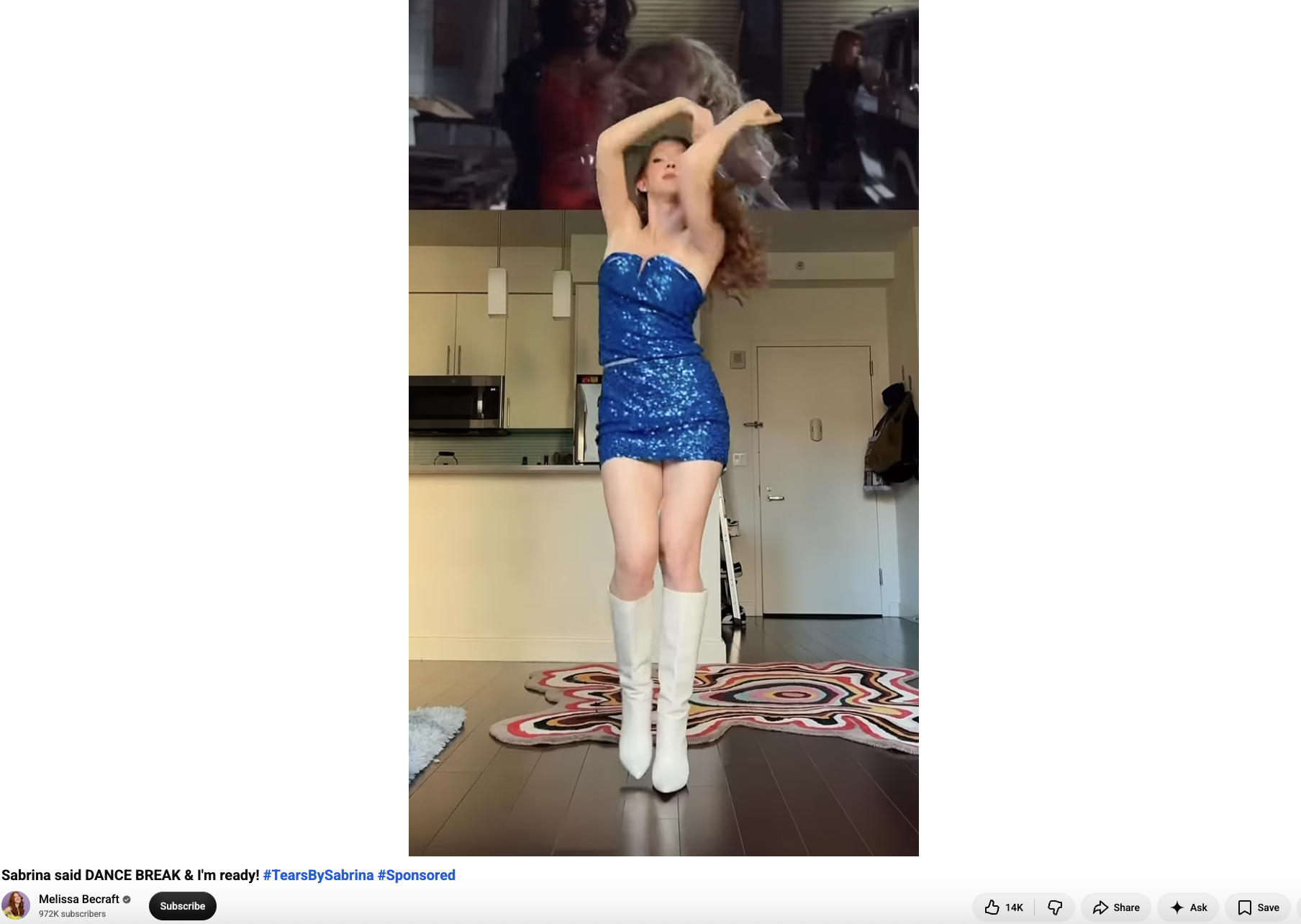
Source: YouTube
Meanwhile, Brian Esperon did a rendition of the choreography in his usual format, where he dances to the camera while the original video plays in the background.
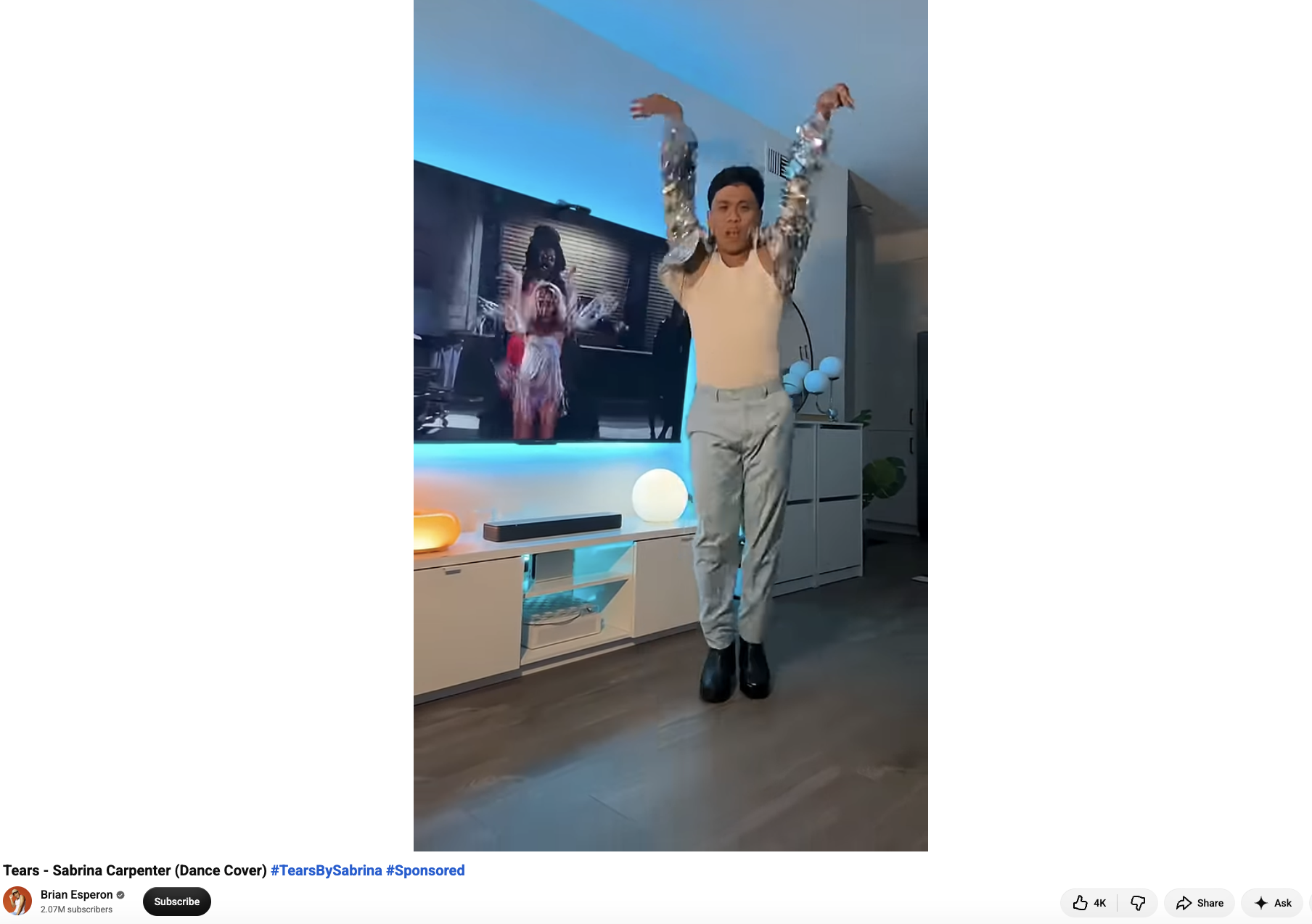
Source: YouTube
And the identical twin sisters behind Diva Sensations added a hip-hop flair to the dance, perfectly matching their usual style.
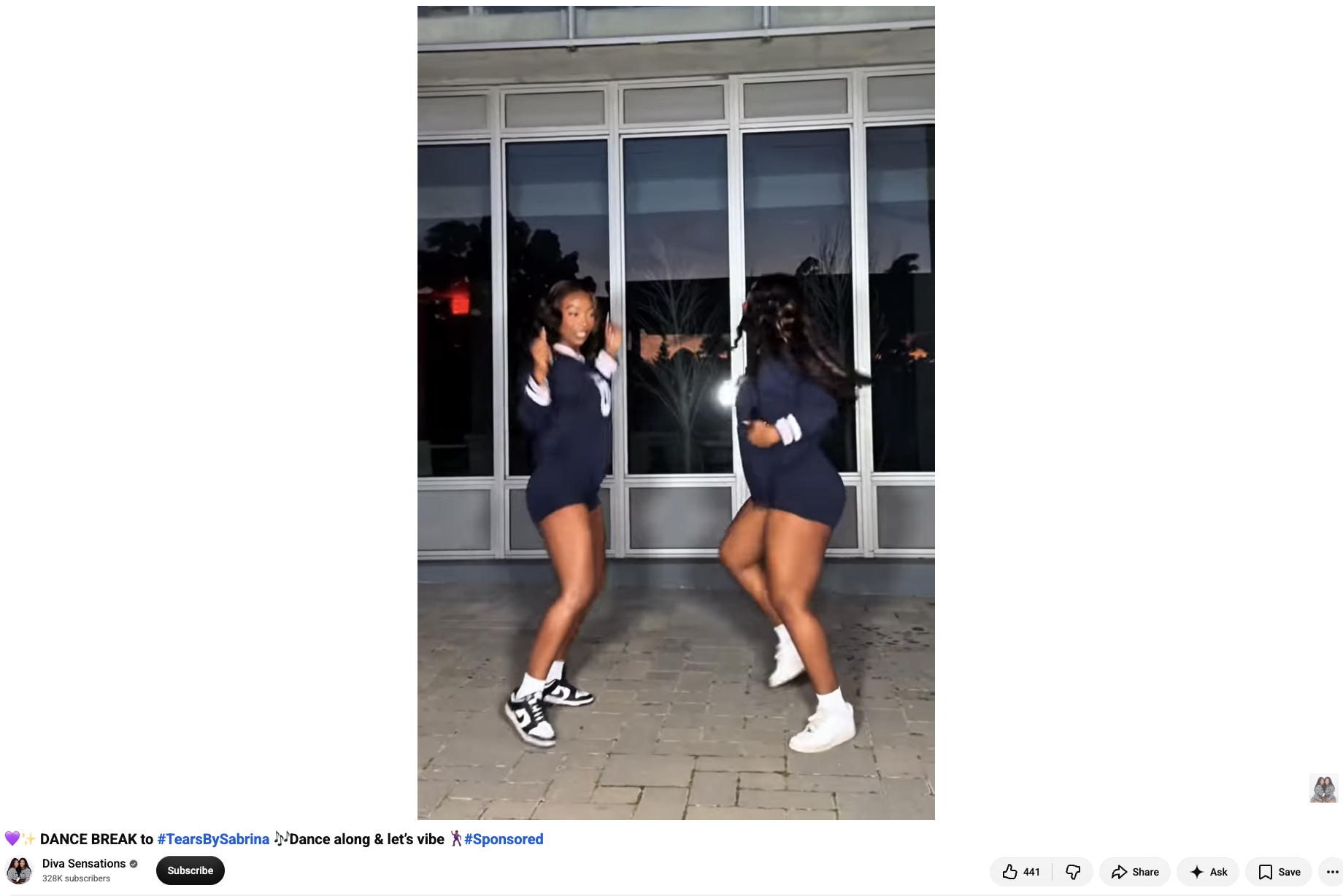
Source: YouTube
Every creator in the campaign made the dance their own while sticking to the brief. So people could see the dance everywhere and felt inclined to participate. That’s how we ended up with authentic and fun performances that pushed participation and drove user-generated content. To date, 64k Shorts have been created using the track.
Balancing Authenticity with Branding
On that same note, while authenticity was the ultimate goal, we still wanted to maintain consistent branding. The campaign content needed to be distinctive enough to be unique to each creator. At the same time, it needed to feel cohesive enough to be instantly associated with the original video.
So instead of asking creators to come up with their own dance moves or simply create content with the song, we tied the whole campaign around the “Dance Break” section of the video. This part had strong choreography that could be recreated by influencers for content that was on-brand with the original video.
Meanwhile, there was also an opportunity for creators to add their own style and vibe to the dance. We made sure to give influencers the freedom to have fun with the choreography. That way, the content still felt native to each creator instead of coming across as overly polished.
Needless to say, fans loved the campaign. The sponsored Shorts saw strong engagement, with over 637k likes during the course of the campaign.
Disclosure Guidelines and Briefing That Hit the Mark
NPR reports that many music influencers are not disclosing when they’ve been paid to promote a song. One creator even highlights that some record labels and marketing agencies specifically ask them not to disclose payment.
While this may be presented as the “norm” in music influencer marketing, it goes against FTC regulations. And failing to disclose material connections could lead to penalties and legal repercussions for both influencers and the musicians they’re promoting.
The FTC specifically requires that influencers disclose when they’ve been paid to promote brands, products, or services. And that includes music.
Even for the “Tears” influencer marketing promo, we made sure to clearly brief creators on disclosure guidelines. Every YouTube creator we worked with used platform-specific labeling tools and used the caption space to indicate that the video was sponsored.
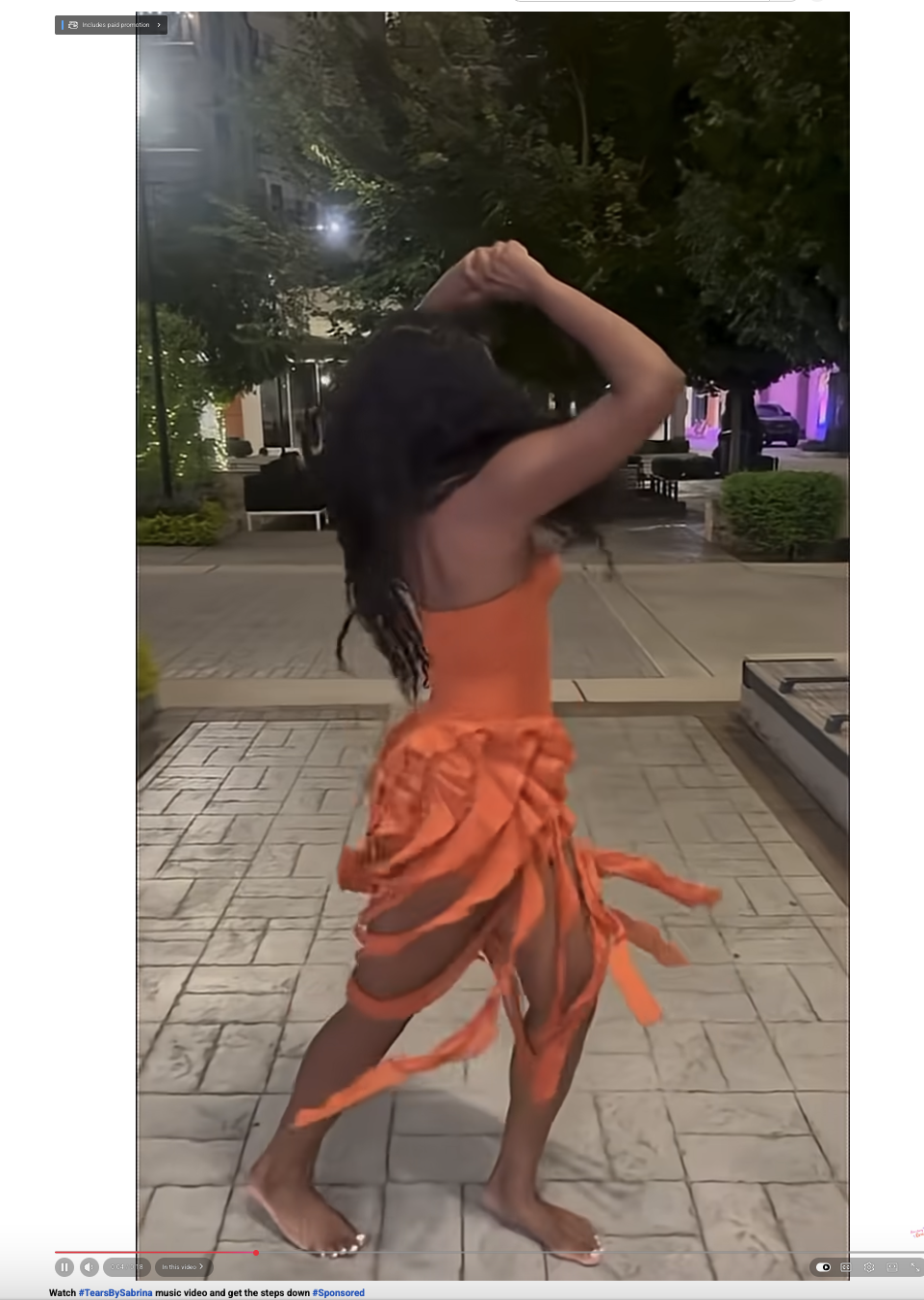
Source: YouTube
Make sure your briefs include clear instructions on how to disclose your partnership. Here are some requirements according to the FTC guidelines:
Material Connections: Creators need to disclose if they were paid, gifted products, or given free VIP access to promote a track or album.
Clear and Conspicuous: Use simple language and unambiguous tags like #ad or #sponsored. Avoid vague labels like #collab, #sp, or just saying "Thanks to [Artist]".
Noticeable Placement: For videos, superimpose the disclosure text clearly on-screen and speak it aloud if the audio promotes the song. For captions, put the disclosure at the very beginning or above the fold, not buried at the bottom or hidden inside a long string of hashtags. For livestreams, repeat the disclosure verbally and visually throughout the broadcast.
Turn Hits into Viral Sensations with YouTube Creators
Even the best songs don’t always become an instant hit if they don’t get enough traction. Influencers help you get your music in front of a bigger audience, driving streams to turn it into the latest chart-topper.
As the team that’s worked with global superstars like Sabrina Carpenter and Taylor Swift, Sulfur Studio knows exactly what it takes for your hit song to become the next viral sensation. From dance challenges for “Tears” to creator-only screenings for “The Fate of Ophelia,” we’ve executed sensational campaigns that left a mark in music influencer marketing.
All geared up for your next release? Book a call with Sulfur Studio to plan your promo.
Frequently Asked Questions
How do I make my song go viral?
You can make your song go viral by taking a short, catchy 5-to-7 second hook and creating repeatable short-form video content on platforms like TikTok and Instagram. Having YouTube creators and social media influencers promote the track is a great way to get it in front of more people and encourage others to use it in their own content.
Do music influencers need to disclose ads?
Yes, music influencers are required by the FTC to disclose ads and any material connection they have with their endorsement. This includes any payment, free gift, or free experience they’ve received in exchange for promoting songs and albums.
What are some strategies to promote music with influencers?
Reaction videos, dance challenges, and clipping campaigns where creators use a pre-selected section of your track in their content are some strategies to promote music with influencers.
